
A Brief Look at Sony Music Entertainment’s SWOT Analysis - Chapter 2

Sony Music Entertainment is one of the most known names in the music industry, but even the most well known companies face unique strengths, challenges, opportunities, and risks. Here’s a quick breakdown of Sony’s SWOT.
Strengths: Sony’s wide-ranging distribution, spanning streaming platforms to social media, boosts its market position. The “One Sony” strategy creates powerful internal collaboration, while global efforts, such as music education initiatives, enhance its reputation.
Weaknesses: Increasing costs for live events and major artists harm finances. Difficulties in managing and retaining artists have been an issue. Their slower embrace of digital trends has also led to a less diverse catalog.
Opportunities: The rise of streaming presents growth possibilities. Exploring more tech-driven music, (not AI) and direct artist-to-fan platforms could strengthen connections with audiences. Collaborating with tech innovators and nurturing local talent could be of benefit.
Threats: Competition from companies like Universal Music, combined with issues like piracy and declining physical sales. Rapid tech advancements and economic volatility could be a future threat.
Overall, with their legacy and vast resources, Sony Music is well-positioned. However, their long term success could hinge on costs, fostering a positive culture, and embracing innovation in a rapidly changing industry.
Sony short term Solvency Ratio analysis - Q1 2025 - Chapter 3
Current Ratio = 1.09
Quick Ratio = 1.03
Cash Ratio = .06
Based on this quick analysis of Sony Group Corporations Financial Statements, it is safe to say they have a strong short term solvency. This means they should have no problem meeting financial obligations for the near future, generally deemed one year.
How did sony creat its competitive advantage in the marketplace? - Chapter 5
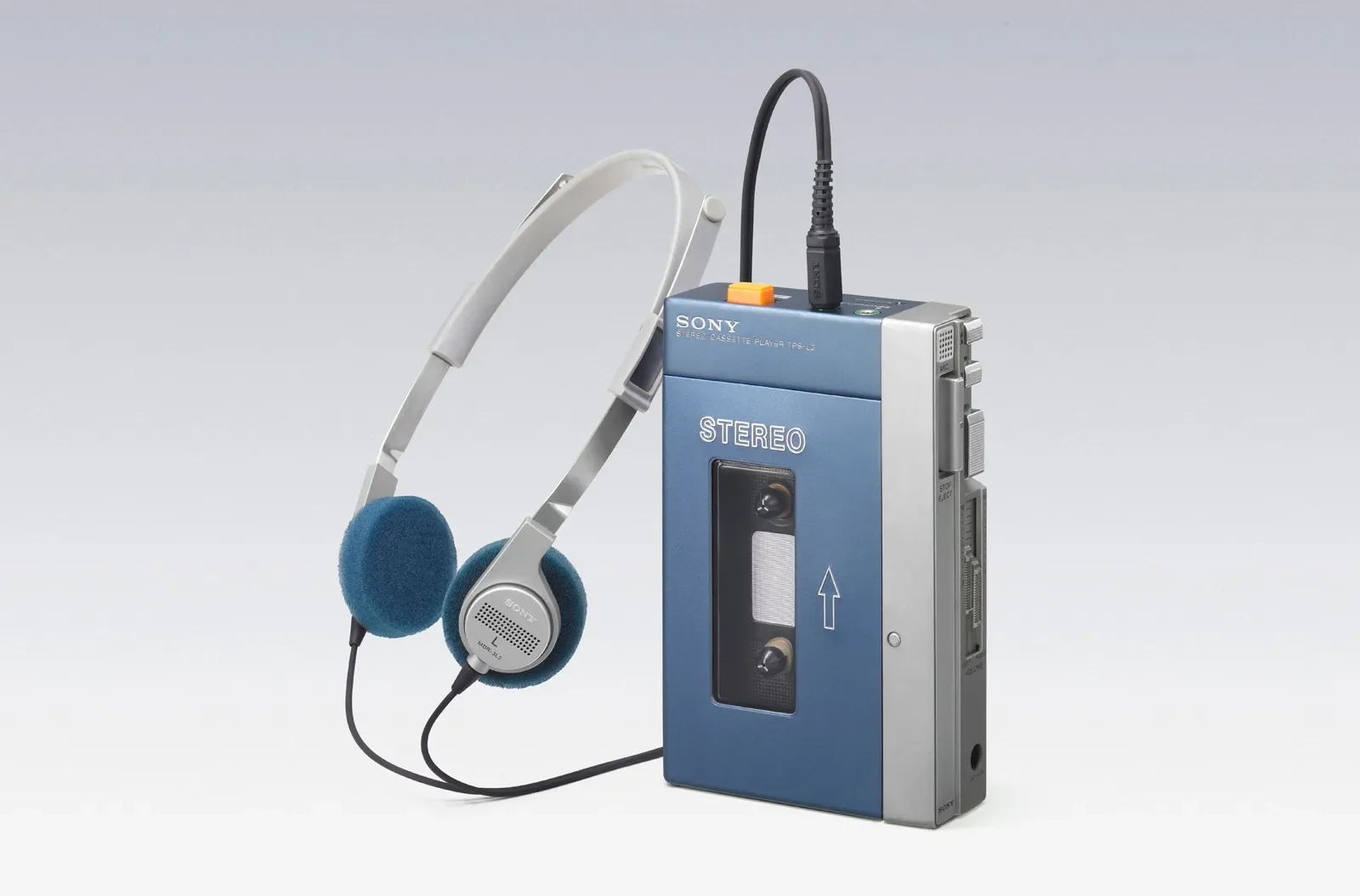
Strategic diversification, brand strength, and innovation were the foundations of Sony's competitive advantage. Its significant R&D expenditures produced well-known devices like the Walkman, PlayStation, and CMOS image sensors, which established new markets and industry standards. Sony was able to command higher margins and cultivate customer loyalty thanks to its premium brand, which is synonymous with quality and cutting-edge technology. By branching out into gaming, entertainment (Sony Music, Sony Pictures), and imaging, it was able to decrease its dependence on specific markets and establish synergies. For example, it now uses its sensors in both consumer cameras and rival smartphones, which account for more than 50% of the global market. Advantages in terms of quality and cost were guaranteed by vertical integration in parts like displays and sensors. High entry barriers and recurring issues were brought about by the PlayStation ecosystem, which featured exclusive games and services like PlayStation Plus.
Tech alliances of sony music - Chapter 8

Spotify - Extended multi-year agreement covering Sony Music Entertainment and Publishing to advance music streaming innovations, including potential AI tools and enhanced artist-fan connections. Builds on prior deals to shape "Streaming 2.0" with features like lossless audio and AI mixing.
SoundPatrol - Partnership with UMG to deploy "neural fingerprinting" technology for detecting AI-generated copyright infringements in music, protecting artists from unauthorized use in AI models.
Musixmatch - AI-based licensing deals with Sony Music Publishing (alongside UMG and WMG) to enable responsibly trained AI services using licensed compositions, ensuring songwriter compensation in AI applications.
Roblox - Strategic alliance to integrate SME artists into Roblox's metaverse for virtual concerts, listening parties, and immersive experiences (e.g., Lil Nas X virtual concert). Expands to new revenue via virtual merchandise and in-game music.
Culture: Sony Music values / Global People Promise - Chapter 9
Creator First - Sony Music puts artists, songwriters, and creators at the forefront of their operations. They are committed to o artistic integrity, transparency, and entrepreneurship.
Excellence - High focus on continuous improvements through tech innovation and expertise in music.
Elevating each other - Promotes collaboration heavily, as well as inclusivity, and mutual support in order to build a trusting body of employees.
Imagine More - Sony encourages bold ideas and boundary-pushing.
Act Responsibly - Focuses on ethical practices, sustainability, and positive societal impact, aligning with Sony Group's broader values of integrity and sincerity.
Sony organizational structure - Chapter 10
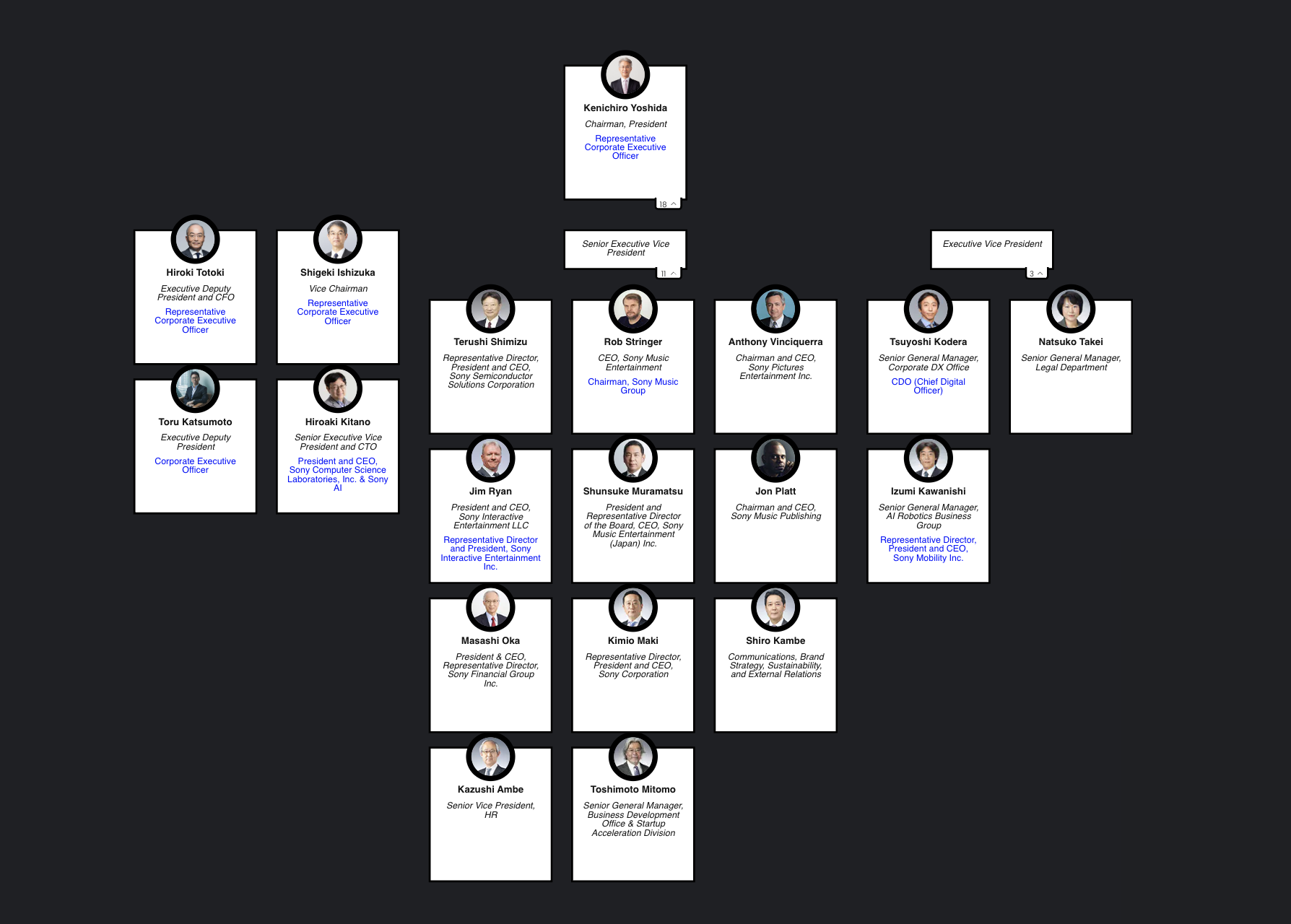
Kenichiro Yoshida - Chairman Representative Corporate Executive Officer
Hiroki Totoki - President and CEO Representative Corporate Executive Officer
Rob Stringer - Officer in charge of Music Business (Global) Chairman, Sony Music Group CEO, Sony Music Entertainment
Shunsuke Muramatsu - Officer in charge of Music Business (Japan) President and Representative Director of the Board, CEO, Sony Music Entertainment (Japan) Inc.
Jon Platt - Officer in charge of Music Publishing (Global) Chairman and CEO, Sony Music Publishing
Kimio Maki - Officer in charge of Entertainment, Technology & Services Business Representative Director, President and CEO, Sony Corporation
Toshihide Endo - Director, President & CEO, Representative Corporate Executive Officer, Sony Financial Group Inc
Ravi Ahuja - Officer in charge of Pictures Business President and CEO, Sony Pictures Entertainment Inc.
Shinji Sashida - Officer in charge of Imaging & Sensing Solutions Business (Newly appointed) Representative Director, President and CEO, Sony Semiconductor Solutions Corporation
Hideaki Nishino - Officer in charge of Game & Network Services Business (Newly appointed) President and CEO, Sony Interactive Entertainment
Hermen Hulst Officer in charge of Game Studio Business (Newly appointed) CEO, Studio Business Group, Sony Interactive Entertainment
Toshimoto Mitomo - Chief Strategy Officer (CSO) Representative Corporate Executive Officer Officer in charge of Legal, Compliance, Privacy, Intellectual Property, Business Strategy, Sustainability, External Relations, Business Incubation Platform, Creative Platform and Mobility Business
Tsuyoshi Kodera - Chief Digital Officer (CDO) Corporate Executive Officer Officer in charge of Digital & Technology Platform (Digital Transformation Strategy, Information Systems, Information Security and Advanced Technology), R&D, Technology Strategy and Quality Management
Yasuhiro Ito - Chief People Officer (CPO) Corporate Executive Officer Officer in charge of Human Resources, General Affairs, the Corporate Executive Office and Lead of Group Diversity, Equity & Inclusion
Lin Tao - Chief Financial Officer (CFO) (Newly appointed) Corporate Executive Officer Officer in charge of Corporate Planning and Control, Corporate Strategy, Accounting, Tax, Finance, IR, Disclosure Controls, Risk Control, Internal Audit and SOX 404
*note* - Accurate as of April 1st, 2025
Sony’s GREATEST INNOVATIONS - Chapter 12
Sony Corporation has pioneered consumer tech and entertainment since 1946. Here are its most impactful breakthroughs:
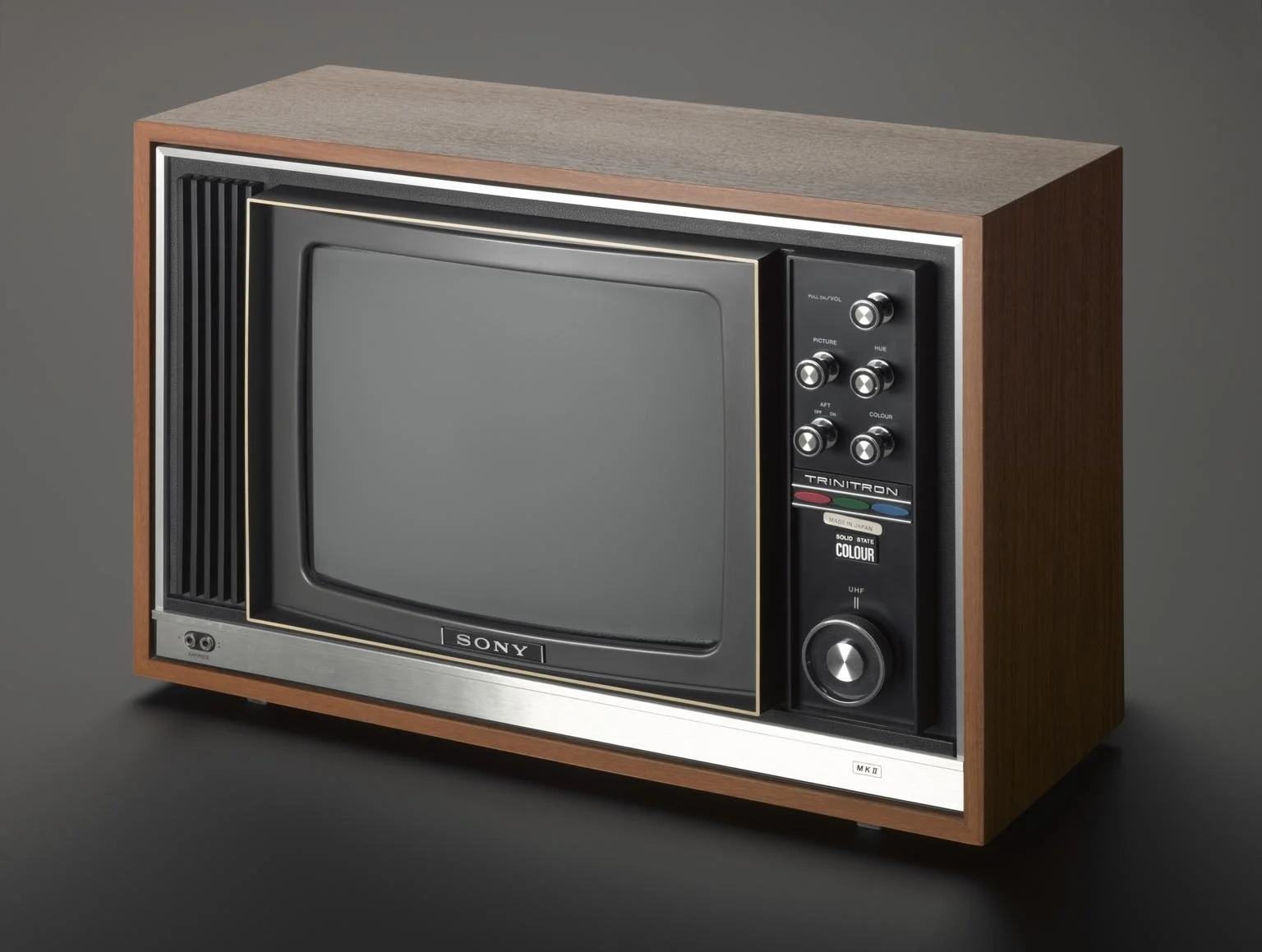
Trinitron TV (1968): Revolutionary aperture-grille CRT with brighter, sharper images. Dominated global TV market for decades; won an Emmy in 1973.
Walkman (1979): TPS-L2 portable cassette player created personal audio culture. Sold 385M+ units across variants; redefined music mobility.
CD (1982, co-developed with Philips): Compact Disc standard launched digital audio era. Enabled perfect sound replication; sold billions worldwide.
PlayStation (1994): Entered gaming with PS1 (102M units). PS2 (2000, 155M units) became best-selling console ever; built Sony's gaming empire.
AIBO (1999): First consumer robot dog with AI emotions/learning. Pioneered robotics entertainment; influenced modern companions like Roomba.
Blu-ray (2006): High-def optical disc (co-developed) won format war vs. HD DVD. Standard for 4K UHD; powers streaming-era physical media.
OLED Mastery (2010s–): Professional MASTER Series TVs with perfect blacks/contrast. Xperia 1's 4K OLED smartphone screen set mobile display benchmarks.
Spatial Audio & 360 Reality Audio (2019): Immersive music format for headphones/speakers. Adopted by Amazon, Tidal; enhances streaming experiences.
CORE COMPENTENCIES - Chapter 6
Sony Music Entertainment stands out in the music industry through its robust core competencies that drive both artistic innovation and commercial success. At the heart of its operations is a sharp focus on A&R and talent discovery, where the company identifies emerging artists, signs them to its roster, and invests in their development to produce music spanning a broad spectrum of genres. This talent pipeline fuels its music creation and production efforts, providing the resources and expertise needed to craft high-quality tracks and engaging audio entertainment that resonate with global audiences.
Complementing these creative strengths is Sony Music's prowess in marketing and promotion. The company employs sophisticated strategies to amplify new releases from its owned labels and artists, effectively expanding their visibility and securing greater market share in a competitive landscape. Additionally, through its platform The Orchard, Sony extends label services and distribution to independent partners, offering them the tools and reach necessary to compete on a larger scale.
Technology and data play a pivotal role in Sony's approach, enabling data-driven insights for performance management, analytics, and refined talent development processes. This tech-savvy foundation ensures decisions are informed and impactful. Finally, the management of Sony's vast music catalog represents a key asset, with initiatives like Sony Music Vision bringing timeless tracks into film and TV storytelling, unlocking new revenue streams and cultural relevance for its extensive library.
International footprint - Chapter 7
Sony's international push shines brightest in entertainment, where cross-border IP collaborations create global hits. The Game & Network Services (G&NS) division boasts 129 million monthly active PlayStation Network users (March 2025), expanding beyond consoles with PC ports, live-service games (60% of R&D), and titles like Ghost of Yōtei (2025). Key partnerships include integrating Crunchyroll’s 17 million-subscriber anime platform and a landmark alliance with KADOKAWA, merging e-commerce, mobile gaming, and manga distribution across North America and Europe.
In Music, Sony propels Japanese artists to global stardom via Spotify (where 20% of top tracks are catalog hits) and live events. Sony Pictures extends its Sustainable Productions program worldwide, aiming for a 25% emissions cut by 2025, zero single-use plastics, and growth in emerging markets. These align with the "Fifth Mid-Range Plan" (FY2024–2026), targeting 10%+ annual operating income growth by spinning off financial services and investing in imaging sensors powering smartphones and autonomous vehicles.